AI is often discussed as either a powerful solution or a potential threat. Some narratives question is How Humans and Artificial Intelligence Work Together in Real-World Systems while others assume AI is simply another automated tool. In reality, neither view is accurate. In most real-world systems, artificial intelligence does not operate alone. Instead, it works alongside humans in carefully defined roles.
Understanding how humans and artificial intelligence work together is essential for using AI responsibly. This collaboration determines whether AI improves outcomes or creates new risks. This article explains how human judgment and AI systems interact in practice, why human oversight remains essential, and how effective collaboration leads to better results across industries. This collaboration becomes clearer once we understand artificial intelligence without technical complexity.
To understand collaboration between humans and systems, revisit our explanation of what is artificial intelligence? AI tools intro.
Advertisement
Understanding the Human–AI Relationship
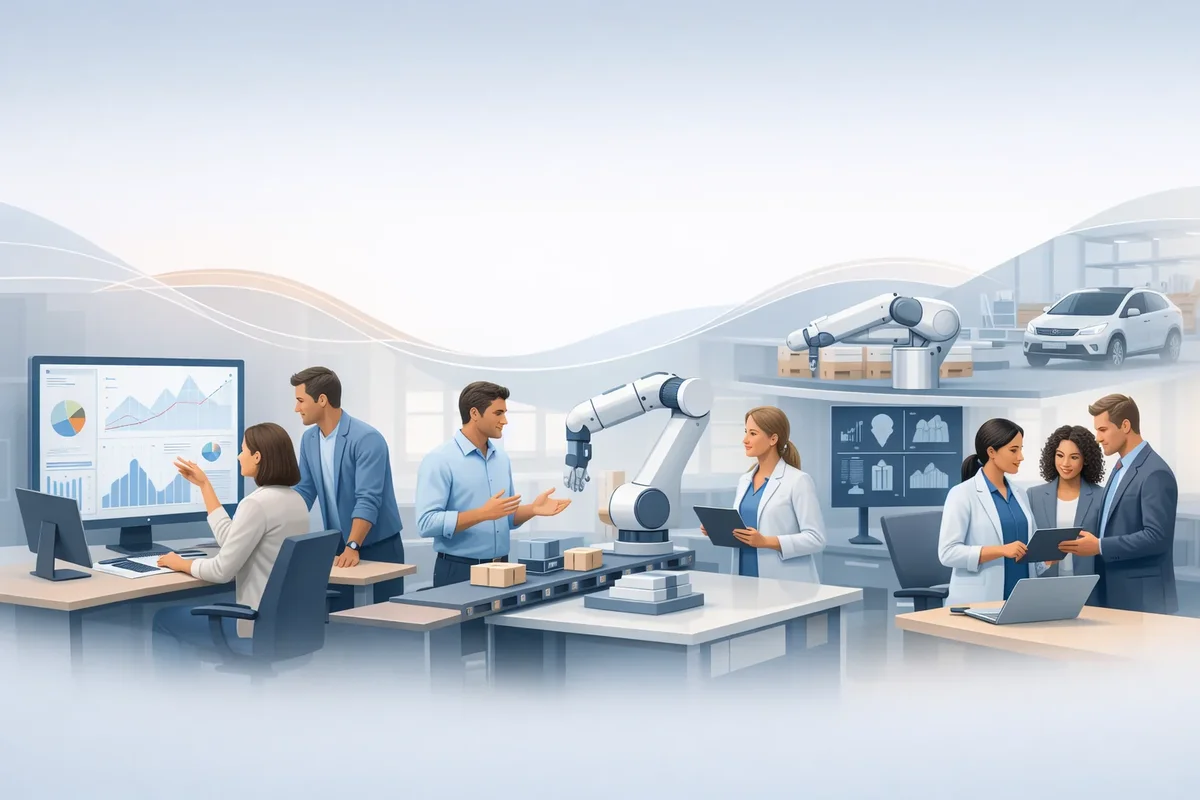
Artificial intelligence systems are designed to process data, recognize patterns, and generate outputs based on learned models. Humans, on the other hand, bring judgment, context, ethics, and accountability. The relationship between humans and AI is not competitive. It is complementary.
AI systems rely on humans at every stage of their lifecycle. Humans define goals, select data, design models, evaluate results, and decide How Humans and Artificial Intelligence Work together. Without human involvement, AI systems cannot function responsibly or meaningfully.
In real-world applications, AI serves as a support mechanism rather than an independent decision-maker.
Why AI Cannot Operate Independently
AI systems do not understand meaning, intention, or consequences. They do not possess awareness or responsibility. Every AI output is the result of statistical calculations applied to training data.
Advertisement
Because of this, AI cannot:
- Determine what is ethically appropriate
- Understand social or cultural context
- Take responsibility for outcomes
- Adjust goals independently
These limitations make human involvement non-negotiable. AI can assist with analysis, but humans must decide how and when that analysis is used.
The Human-in-the-Loop Model Explained
One of the most widely used approaches to responsible AI deployment is the human-in-the-loop model. In this approach, AI systems generate recommendations or insights, but humans review, approve, or modify outcomes before action is taken.
This model ensures that:
- AI errors are caught before impact
- Bias and context gaps are addressed
- Accountability remains clear
- Decisions align with human values
Human-in-the-loop systems are used in healthcare, finance, education, customer support, and business strategy. The goal is not to slow down AI, but to ensure accuracy, fairness, and responsibility.
Human Roles Across the AI Lifecycle
Human involvement is required at every stage of an AI system’s existence.
Defining the Problem
Humans decide what problem AI is meant to solve. This includes determining whether AI is even the right tool for the task. Poorly defined goals often lead to ineffective or harmful AI use.
AI does not identify problems. It responds to human-defined objectives.
Data Selection and Preparation
AI systems learn from data selected by humans. Decisions about what data to include, exclude, or prioritize directly affect outcomes.
Human responsibilities include:
- Ensuring data quality
- Identifying potential bias
- Understanding data limitations
- Evaluating relevance
Without careful human oversight, AI systems can reinforce existing errors or unfair patterns.
Model Design and Training
Humans design AI models and choose training methods. These choices determine how the system behaves, what it prioritizes, and where it may fail.
AI does not choose how it learns. Humans control the learning process.
Output Evaluation and Interpretation
AI outputs often require interpretation. A prediction, score, or recommendation does not explain itself. Humans must evaluate whether outputs make sense in context.
This step is critical because AI outputs can appear confident even when they are incorrect. Human judgment prevents blind trust in automation.
Human Judgment in Business Systems
In business environments, AI is commonly used for forecasting, analytics, and operational support. However, final decisions remain human responsibilities.
Business leaders must consider:
- Legal obligations
- Ethical implications
- Brand trust
- Long-term consequences
AI can analyze trends, but it cannot assess reputation risk or moral responsibility. Human oversight ensures decisions align with organizational values.
Human Oversight in Education and Learning
AI tools are increasingly used in education to support learning, organization, and research. While AI can assist students, education remains a human-centered process.
Teachers and educators provide:
- Guidance and mentorship
- Evaluation of understanding
- Ethical instruction
- Critical thinking development
AI may offer explanations, but it cannot assess learning depth or originality. Human involvement ensures education remains meaningful and fair.
Collaboration in Customer Support Systems
In customer support, AI is often used to manage volume and efficiency. Chat systems, routing tools, and analytics can reduce workload, but they cannot replace human understanding, that is How Humans and Artificial Intelligence Work together?
Humans are essential for:
- Handling emotional or complex situations
- Resolving conflicts
- Building trust
- Interpreting intent
Effective systems use AI to assist support staff, not to remove human interaction entirely.
Managing Risk Through Human Oversight
AI systems can amplify risk if deployed without adequate human control. Over-automation can lead to errors that spread quickly and affect many users, who are thinking about how Humans and Artificial Intelligence Work togeather.
Common risks include:
- Bias reinforcement
- Incorrect recommendations
- Loss of accountability
- Reduced transparency
Human oversight acts as a safeguard. It ensures that AI outputs are evaluated before they influence real-world decisions.
Accountability and Responsibility
AI systems cannot be held accountable. Responsibility always belongs to humans and organizations.
Clear accountability requires:
- Defined roles for AI use
- Documentation of decision processes
- Human review of critical outcomes
- Ongoing monitoring and evaluation
When accountability is unclear, trust erodes. Human responsibility ensures transparency and ethical use, and this actually highlight to resolve the question that How Humans and Artificial Intelligence Work together.
Avoiding Over-Reliance on AI
One of the biggest challenges in human–AI collaboration is over-reliance. When users assume AI is always correct, errors go unnoticed, in such environment, how Humans and Artificial Intelligence Work together.
Healthy collaboration requires:
- Skepticism toward automated outputs
- Independent verification
- Awareness of limitations
- Continuous learning
AI should support thinking, not replace it.
The Balance Between Efficiency and Judgment
AI improves efficiency by handling scale and repetition. Humans provide judgment by handling complexity and nuance.
Successful systems balance:
- Speed and accuracy
- Automation and discretion
- Data-driven insight and human experience
This balance allows organizations to benefit from AI without sacrificing responsibility. These systems highlight why human judgment remains essential beyond the capabilities of artificial intelligence, and how Humans and Artificial Intelligence Work steadily.
Building Trust in Human–AI Systems
Trust depends on transparency and control. Users need to understand when AI is involved and how decisions are made.
Trust is built when:
- AI roles are clearly defined
- Human oversight is visible
- Errors are acknowledged and corrected
- Decision processes are explainable
How Humans and Artificial Intelligence Work together without trust, even accurate AI systems face resistance.
Preparing People to Work With AI
Human–AI collaboration requires skill development. People must learn how to interpret AI outputs and question results appropriately.
Key skills include:
- Critical thinking
- Data literacy
- Ethical reasoning
- Contextual judgment
Training humans is just as important as training AI systems.
The Future of Human and AI Collaboration
Artificial intelligence will continue to evolve that how Humans and Artificial Intelligence Work together, even its role will remain supportive. AI will handle scale and speed. Humans will handle meaning, values, and responsibility.
The future is not human versus AI. It is need to have more research on the question that how Humans and Artificial Intelligence Work together within clear boundaries.
Organizations that recognize this distinction are better prepared for sustainable, responsible AI adoption.
Conclusion
Artificial intelligence does not operate independently in real-world systems. It depends on human judgment at every stage, from design and deployment to interpretation and accountability.
How Humans and Artificial Intelligence Work best together?, It will be when roles are clearly defined. AI provides analysis and efficiency. Humans provide understanding, ethics, and responsibility.
Looking beyond AI means recognizing that technology alone cannot replace human insight. Responsible collaboration ensures that artificial intelligence enhances outcomes without undermining trust, accountability, or human values.
Collaboration models depend on understanding artificial intelligence vs human intelligence and their strengths.